
Single room & bedroom painting
One room painted properly — walls, trims and ceiling if it needs it — without being told you have to do the whole house …
Read moreServices
Patch & PaintWall repairs & gyprock patchingPaint touch-upsCeiling repairs & repaintingGuides
Fixing holes in wallsPeeling & flaking paintInterior PaintingSingle room & bedroom paintingCeiling paintingFeature walls & colour changesGuides
What it costs to paint a roomHow to paint a roomExterior, Doors & TimberDoors, frames & trimsFence & gate paintingDeck & outdoor timber stainingGuides
How to paint a doorStaining a deck in BrisbaneHow to paint a fenceRental, Pre-Sale & CommercialRental property touch-upsPre-sale paintingSmall commercial & office paintingGuides
Painting a rental propertyMore
Gallery Reviews About Tony Contact Get a Quote Call 0433 123 785Feature walls & colour advice, Brisbane
A single accent wall or a full colour change in one room — including a straight opinion on whether the colour you have chosen will actually work in your light.
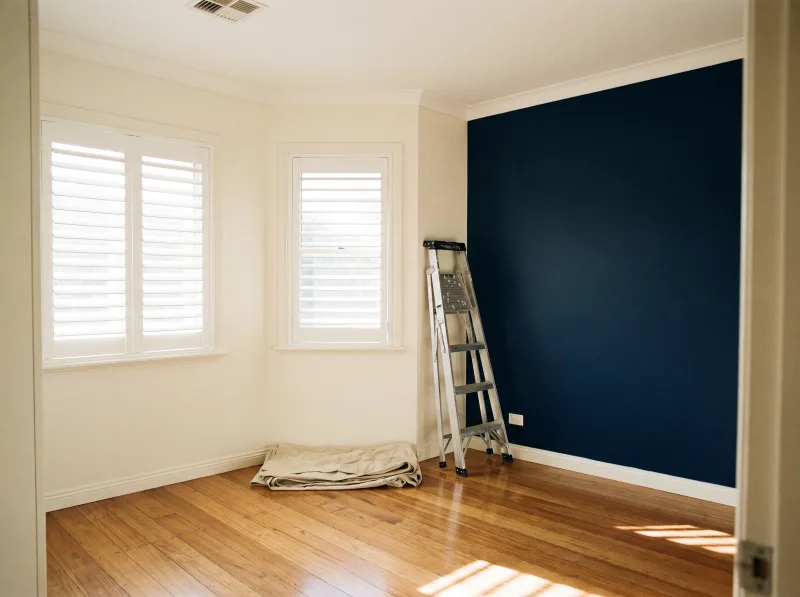
A feature wall is the cheapest way to change how a room feels, and the easiest thing to get wrong. The same colour that looked right on a chip in the shop can read completely differently on a south-facing wall in a Queenslander with filtered light through the trees.
Tony has applied enough of these to know which colours hold up and which ones disappoint, and he will tell you before the tin is opened rather than after.
Paint a sample on the actual wall and look at it morning and evening. Brisbane light changes a colour dramatically through the day.
Strong colours — deep blues, charcoals, reds — often need three coats over a light wall. Quoting two and stopping there is how patchy feature walls happen.
Painting a pale colour over a dark wall without blocking it first means the old colour keeps showing through no matter how many topcoats go on.
A feature wall lives or dies on the corner line where it meets the next wall. That is cut in by hand.
Also under Interior Painting
One room painted properly — walls, trims and ceiling if it needs it — without being told you have to do the whole house …
Read moreFlat, even ceiling coverage that hides old marks and shadowing — done alongside a room repaint, or as a small job on its…
Read more