
Moisture is the usual culprit
Paint needs a dry surface to bond to. If water is getting in behind it — from a leak, from rising damp, from a poorly sealed window, or from a bathroom with no working extraction fan — the paint film loses its grip from underneath and lets go in sheets.
This is why a bathroom ceiling or the wall under a window is so often the first place you see it. The fix is not paint. It is finding where the water comes from, dealing with that, then letting the surface dry before anything is coated.
Poor preparation on the previous coat
Paint applied over a dirty, chalky or glossy surface never bonded properly in the first place. It may have looked fine for a year or two, then started lifting at the edges.
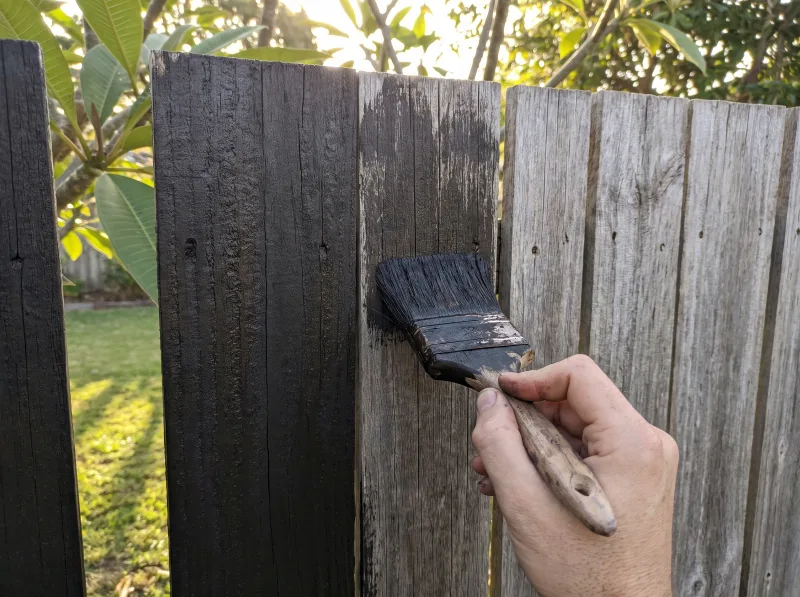
On exterior timber in Brisbane this is extremely common. A fence or a door coated over a weathered, powdery surface will lift regardless of how good the paint was.
The coating has simply reached the end
Exterior paint has a working life. Under Brisbane UV, a coating on a north or west facing surface will chalk and break down years before the same paint on a shaded wall.
When paint fails uniformly across a whole sunny elevation rather than in patches, age and exposure are usually the answer rather than anything gone wrong.
Incompatible products
Water-based paint over an old oil-based enamel without an appropriate primer will peel, sometimes in large sheets. So will paint applied over a surface that was previously treated with something it cannot key to.
Older Brisbane homes frequently have several generations of coating on the same trim, which is why the preparation on a hundred-year-old architrave takes longer than the painting.
Why painting over it never works
New paint is only ever as sound as what it sits on. Coat over flaking paint and the new film bonds to material that is already letting go — so it fails with it, and usually faster, because the new coat is under tension as it dries.
The fix is always the same: remove the loose material back to a sound edge, feather that edge so it does not show, prime what has been exposed, then coat. Skipping straight to the coat is why the problem returns.